- Free
- Ages 8–10
- Instant PDF
The Starter Workbook
Big Feelings, Brave Hearts
Seven real tools for worry, anger and the hard stuff, and a guide that tells you exactly what to say.
- The full 8-week program: 17 sessions, 15–20 minutes each
- 44-page workbook + 29-page Grown-ups' Guide + cut-outs
- Built from 28 published studies, all listed with links
- Print at home, colour or black-and-white
No card neededLinks emailed straight awayNothing is posted
What lands in your inbox
- PDFWorkbook44 pages · for your child
- PDFGrown-ups' Guide29 pages · for you
- PDFCut-outs6 pages · tool cards, fridge card, game cards
Digital product, A4. Refund policy · See the research
What they'll practise, one tool a week
- 1Name it
- 2Body tools
- 3Stop, think, choose
- 4Another way to see it
- 5Brave steps
- 6Walk in their shoes
- 7Kind acts
When you'll use it
Every tool has a moment.
“I'm FINE!” (door slams)
Name it. Find the word for the feeling, and where it shows up in the body.
Lying awake, wound up tight.
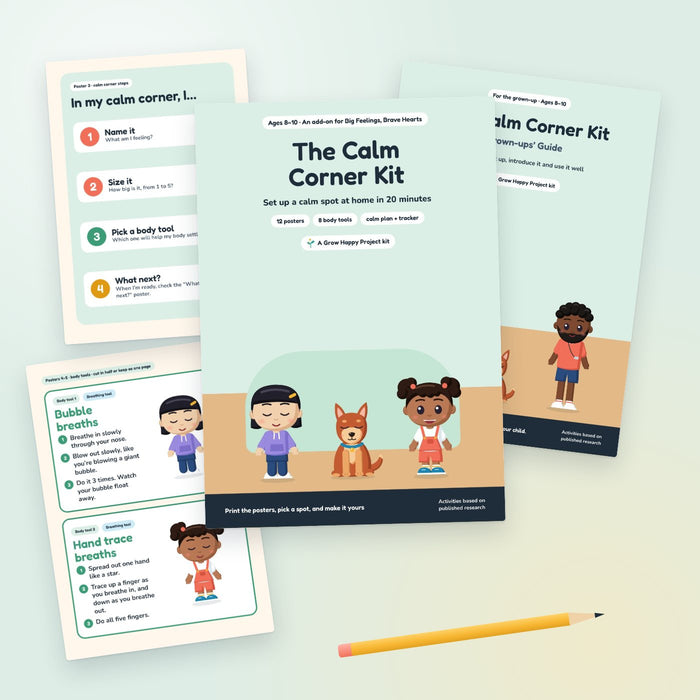
Body tools. Bubble breaths, push the wall, shake it out, then a calm plan in their own words.
The fight over whose turn it is.
Stop, think, choose. Six steps to sort out a problem, plus the words to say.
“Nobody likes me.”
Another way to see it. Detective questions that check a worry thought against what really happened.
The tummy ache before the carnival.
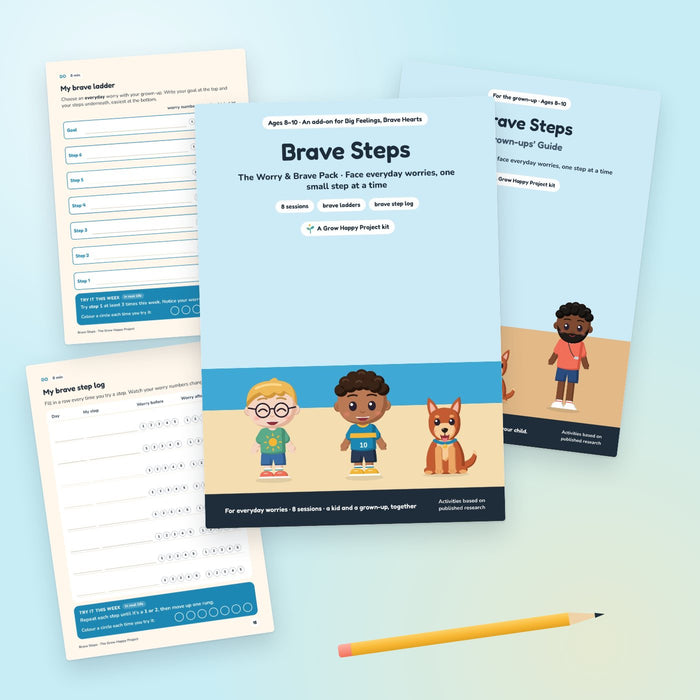
Brave steps. A brave ladder: small steps towards the hard thing, one rung at a time.
A mate who's having a rough day.
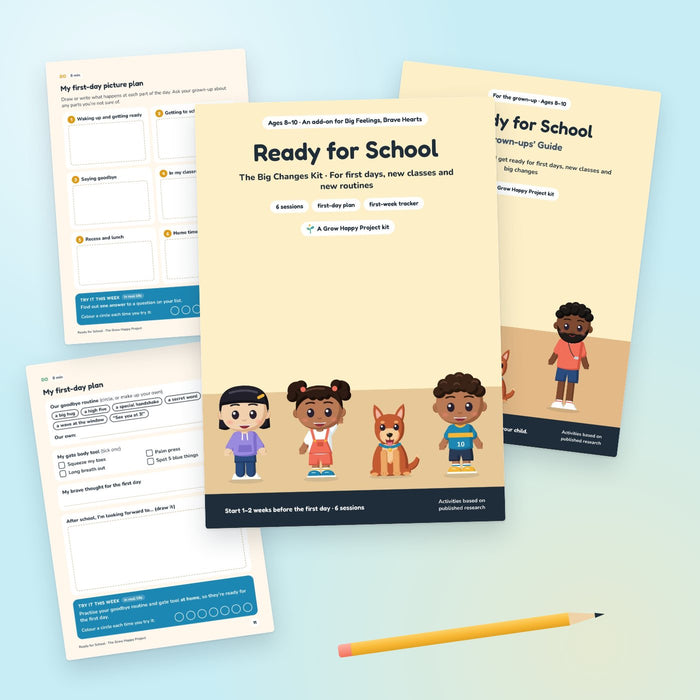
Walk in their shoes · Kind acts. Spot the feeling clues, then choose a kind thing to do.
Look inside
Flip through real pages.


Everything in the kit
Not a sample. Not a trial. The whole program.

- 1The Workbook44 illustrated pages. 17 sessions over 8 weeks, with the Coopers in every story.
- 2The Grown-ups' Guide29 pages. One page per session: what to say, what to notice, and what to do if they say “I don't know”.
- 3Tool cardsAll seven tools, pocket-sized. Clip them on a ring for the school bag.
- 4The fridge card“When feelings are big”: name it, accept it, then solve it, with the words to use.
- 5Feelings cards and game cardsFor warm-ups, feelings charades and “what might they feel?”
- 6Pages that become theirsTheir own calm plan, brave ladder, practice tracker and everyday tool poster.
- 7The research, in fullEvery activity is based on published studies. All 28 are listed at the back, with links.
How it works
Twice a week. 15 minutes. No prep.
- 2 minWarm-upA quick feelings check-in.
- 5 minLearnA short story shows the tool in action.
- 8 minDoCircle, colour, draw or act it out.
- All weekTry itOne small thing at dinner, in the car or at bedtime.
Busy night? The Grown-ups' Guide has a 10-minute version of every session.
Honest fit check
Is it right for your family?
A great fit if…
- Your child is 8 to 10 and has everyday big feelings: worries, meltdowns, friend troubles.
- You can find 15–20 minutes, twice a week, to sit with them.
- You'd like the words to use in the moment, not just theory.
- You want something based on research, without big promises.
Not the right tool if…
- You're after therapy or a diagnosis. This is skills practice, and it doesn't replace professional help.
- Worries are stopping your child from doing everyday things. Please talk to your GP first.
- You'd like a hand-off activity. It's designed to be done together.
The research behind it
Built on the research. Honest about it.
Every activity uses techniques studied in research with children. The full reference list, with links, is at the back of the workbook and on our Research page.
On average, programs that teach these skills have small but real benefits. They last longest when grown-ups keep practising, so practice is built into every week.
No toxic positivity and no “you're so smart” praise. The guide shows you how to praise effort and brave attempts instead.
How you get it
Three steps. About a minute.
- 1Tap “Get it free”It goes straight to a $0 checkout.
- 2Pop in your emailIt's a $0 order, so there's no card to enter.
- 3Open your inboxDownload the three PDFs, print pages 1 to 6, and you're ready for session one.
Questions about the Starter Workbook
Is it really free? What's the catch?
No catch. You check out at $0 with just your email. You can join our tips email if you'd like to, and unsubscribe any time. When you want more, our paid kits go deeper on specific topics.
How long does it take?
Two sessions a week for 8 weeks, about 15 to 20 minutes each. There's a 10-minute version of every session in the Grown-ups' Guide.
Do I need a colour printer?
No. Every page works in black-and-white. If you can, print the cut-outs on card.
My child doesn't like writing. Will it work?
Yes. Kids can draw, circle or point instead, or tell you and you write it down. There are no wrong answers.
Can I use it with more than one child?
Yes. Print a fresh workbook for each child in your family, as many times as you like.
Can I use it in my classroom?
The free licence is for home use. We're building classroom licences. Visit For Teachers to join the waitlist.
What if my child shares something worrying?
The Grown-ups' Guide has a page on exactly this, plus a page on when to get more help. In an emergency, call 000. Kids Helpline is on 1800 55 1800.
Is this therapy?
No. It's everyday skills practice for everyday big feelings, and it doesn't replace professional help. If your child's worries are stopping them from doing everyday things, talk to your GP.
When you're ready for more